


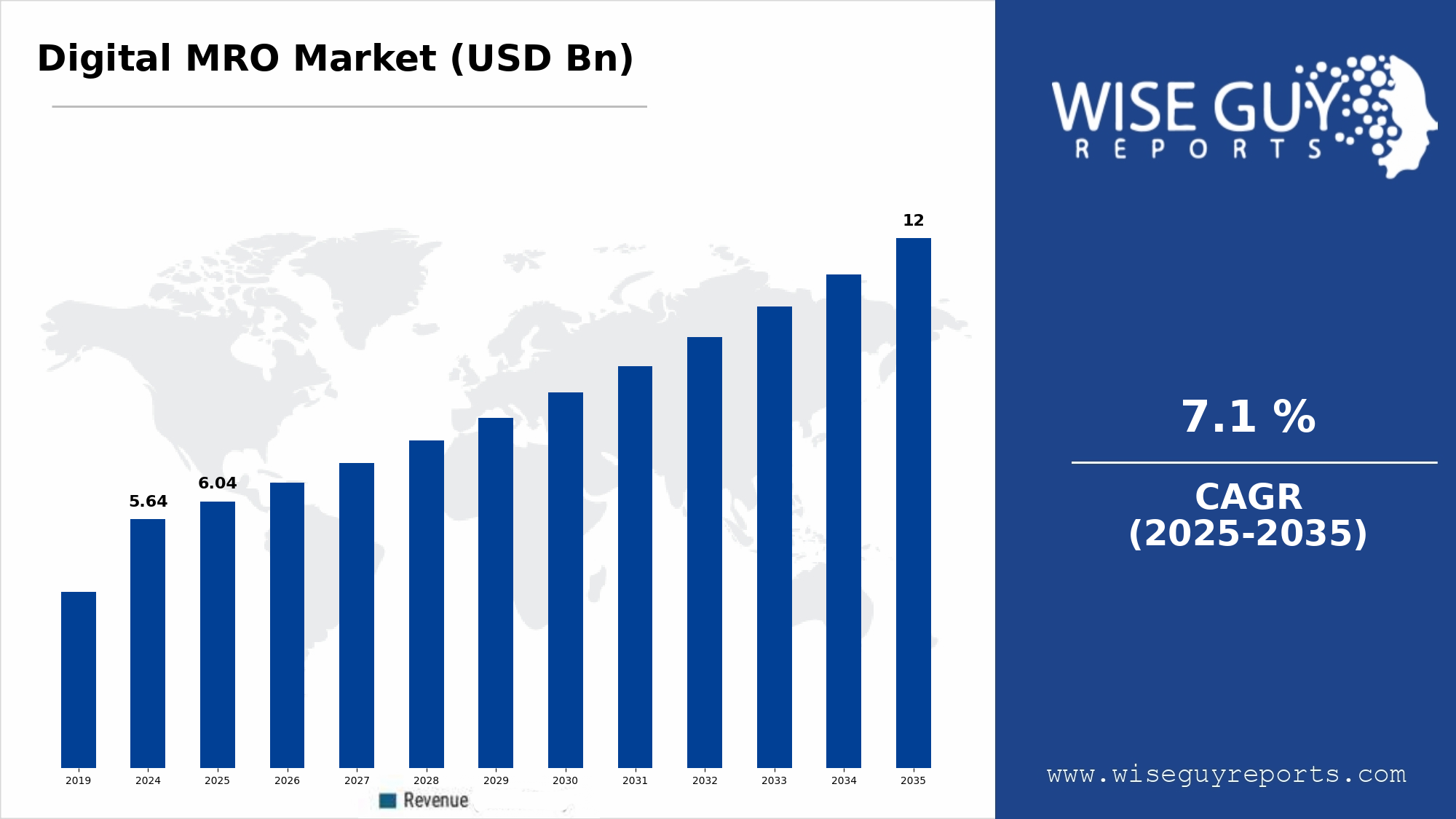
The Digital MRO Market is undergoing a comprehensive evolution as industries embrace digital technologies to enhance maintenance, repair, and overhaul operations. At its core, digital MRO integrates advanced analytics, machine learning, IoT, and cloud platforms to create intelligent maintenance ecosystems that improve equipment reliability and asset uptime. According to industry data, The Digital MRO Market is expected to grow from 6.04 USD Billion in 2025 to 12 USD Billion by 2035. The Digital MRO Market CAGR (growth rate) is expected to be around 7.1% during the forecast period (2025 - 2035).
One of the most prominent Digital MRO Market trends is the shift toward real-time data utilization. Traditional MRO strategies, which relied on scheduled checks and post-failure repairs, are being replaced by data-driven approaches that leverage sensors and IoT devices. These technologies feed continuous operational data into predictive models, enabling maintenance teams to foresee component failures — a capability that dramatically reduces unplanned downtime and enhances operational resilience across major sectors like aviation and industrial manufacturing.
Predictive maintenance remains a cornerstone of the digital MRO landscape. By analyzing historical performance data and machine behavior patterns, organizations can optimize repair cycles, allocate resources more effectively, and ultimately reduce maintenance costs. Predictive tools also support sustainability initiatives by minimizing unnecessary part replacements and reducing waste — a growing priority for corporate environmental strategies.
Another significant trend shaping the Digital MRO Market is the adoption of digital twin technology. Digital twins create virtual replicas of physical assets, allowing engineers to simulate conditions, predict wear patterns, and test maintenance strategies in a virtual environment before applying them in the field. This capability enhances planning precision and reduces trial-and-error approaches that can lead to costly downtimes.
Cloud-based digital MRO solutions are also rising in prominence because they offer scalability, remote access to critical data, and reduced upfront IT infrastructure costs. Cloud deployments enable maintenance teams across geographies to collaborate seamlessly, share insights, and respond quickly to emerging issues. Although on-premises solutions maintain relevance for organizations prioritizing data control and customization, the flexibility and cost efficiencies of cloud systems are propelling their market adoption.
The competitive landscape of the Digital MRO Market features a mix of established technology leaders and emerging innovators. Major players such as Boeing, Airbus, General Electric, Honeywell, and Siemens are leveraging their deep industry expertise to deliver comprehensive digital MRO platforms that integrate predictive analytics, IoT integration, and AI-enabled decision tools. Strategic collaborations, such as those between Collins Aerospace and MTU Aero Engines or the acquisition of advanced analytics firms, illustrate how industry leaders are expanding their digital capabilities to capture market opportunities.
Regionally, North America dominates the digital MRO landscape, supported by its advanced infrastructure, significant investment in digital aviation and industrial technologies, and presence of major MRO operators. Europe and Asia-Pacific are also substantial contributors to market growth. In particular, the Asia-Pacific region is experiencing accelerated adoption of digital maintenance solutions, driven by rising aviation traffic, industrial modernization, and increasing focus on operational efficiency.
The Digital MRO Market is not confined to aerospace. Automotive manufacturers, industrial equipment firms, and electronics producers are also leveraging digital MRO solutions to enhance maintenance precision and resource utilization. These cross-sector applications underscore the growth potential and broad relevance of digital maintenance approaches beyond traditional aircraft MRO.
Looking ahead, the convergence of technologies such as augmented reality (AR) for maintenance training and edge computing for real-time analytics will continue to expand the capabilities of digital MRO systems. As organizations strive for greater uptime, reduced costs, and smarter asset management, digital MRO solutions are positioned to redefine maintenance strategies in the decades to come.
In summary, the competitive landscape, rapid technological advancements, and increasing demand for efficient maintenance workflows ensure sustained development of the Digital MRO Market through 2035 and beyond.

 Arabic
 French
 Spanish
 Portuguese
 Deutsch
 Turkish
 Dutch
Dutch
 Italiano
 Russian
 Romaian
 Portuguese (Brazil)
 Tiếng Việt