


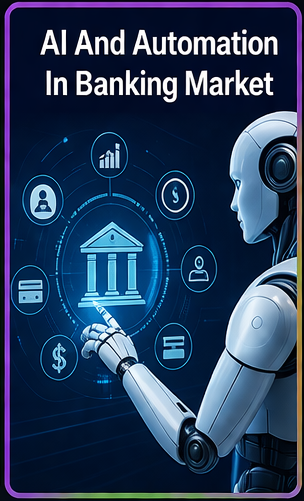
Artificial intelligence and automation are rapidly reshaping the banking landscape, driving a fundamental shift in how financial institutions operate, compete, and serve customers. What was once considered experimental is now becoming core infrastructure, as banks integrate intelligent systems to enhance efficiency, reduce risk, and deliver personalized experiences. The evolution of AI in banking is no longer about isolated use cases; it is about creating interconnected ecosystems where data, algorithms, and automation work seamlessly together.
The Rise of Intelligent Banking Systems
Banks are increasingly adopting AI-driven platforms to modernize legacy systems and remain competitive in a digital-first economy. The growing demand for real-time services, coupled with rising customer expectations, has accelerated the deployment of AI in banking: fraud detection, robo advisor, credit scoring, chatbot banking, aml ai solutions across global financial institutions.
Fraud detection, in particular, has seen significant advancements. Traditional rule-based systems are being replaced by machine learning models capable of analyzing vast datasets in real time. These systems can detect anomalies, predict fraudulent patterns, and respond instantly, reducing financial losses and enhancing trust. Similarly, aml ai (anti-money laundering powered by artificial intelligence) is transforming compliance by automating transaction monitoring and improving the accuracy of suspicious activity detection.
Another key development is the integration of AI into credit scoring models. By leveraging alternative data sources—such as transaction behavior, digital footprints, and spending patterns—banks can assess creditworthiness more accurately and inclusively. This approach not only reduces default risk but also expands access to financial services for underserved populations.
Personalization Through Automation and AI
One of the most visible impacts of AI in banking is the rise of hyper-personalized customer experiences. Robo advisor platforms are redefining wealth management by offering automated, algorithm-driven financial planning services. These systems analyze user goals, risk tolerance, and market conditions to deliver tailored investment strategies at a fraction of the cost of traditional advisory services.
At the same time, chatbot banking has become a standard feature across digital platforms. Modern AI-powered chatbots are far more sophisticated than their early predecessors. They use natural language processing (NLP) and contextual understanding to handle complex queries, provide financial advice, and even execute transactions. This not only improves customer satisfaction but also significantly reduces operational costs for banks.
Automation is also streamlining back-office operations. From loan processing to compliance reporting, AI systems are reducing manual workloads and minimizing human error. The result is faster turnaround times, improved accuracy, and enhanced scalability—key factors in an increasingly competitive market.
Emerging Trends Driving the Future
Several emerging trends are shaping the next phase of AI and automation in banking. One of the most notable is the adoption of generative AI, which is enabling banks to create more dynamic and interactive customer experiences. From generating personalized financial insights to automating document processing, generative AI is unlocking new levels of efficiency and engagement.
Another important trend is the convergence of AI with cloud computing. Cloud-based AI platforms allow banks to scale their operations quickly, deploy new services faster, and reduce infrastructure costs. This shift is particularly important for smaller financial institutions looking to compete with larger players.
Cybersecurity is also evolving alongside AI adoption. As digital transactions increase, so does the risk of cyber threats. Advanced AI systems are being used to strengthen fraud detection mechanisms, identify vulnerabilities, and respond to threats in real time. This proactive approach is essential in maintaining the integrity of financial systems.
In addition, regulatory technology (RegTech) is gaining traction. AI-driven compliance tools are helping banks navigate complex regulatory environments more efficiently. By automating reporting and monitoring processes, these tools reduce the burden of compliance while ensuring adherence to global standards.
Market Outlook and Strategic Implications
The rapid adoption of AI and automation is not just a technological shift—it is a strategic imperative for banks worldwide. According to Grand View Research, the global AI and automation in banking market size is projected to reach USD 239.64 billion by 2033, growing at a CAGR of 24.9% from 2026 to 2033. This growth reflects the increasing reliance on intelligent systems to drive innovation, improve efficiency, and enhance customer experiences.
In essence, the banking sector is undergoing a transformation where AI is becoming the backbone of operations. From fraud detection and aml ai to robo advisor platforms and chatbot banking interfaces, the integration of intelligent technologies is redefining every aspect of financial services. Moreover, advancements in credit scoring and predictive analytics are enabling banks to make more informed decisions, reduce risks, and unlock new opportunities.
A concise way to understand this transformation is that banks are moving from reactive, manual processes to proactive, data-driven ecosystems powered by AI. Automation is no longer just about cost savings—it is about creating smarter, faster, and more resilient financial institutions capable of adapting to a rapidly changing environment.
As the industry continues to evolve, the success of AI in banking will depend on how effectively institutions balance innovation with trust. Ensuring data privacy, maintaining transparency, and addressing ethical concerns will be critical in building long-term customer confidence. Banks that can navigate these challenges while leveraging the full potential of AI and automation will be well-positioned to lead the future of finance.

 English
 Arabic
 French
 Spanish
 Portuguese
 Deutsch
 Turkish
 Italiano
 Russian
 Romaian
 Portuguese (Brazil)
 Tiếng Việt