


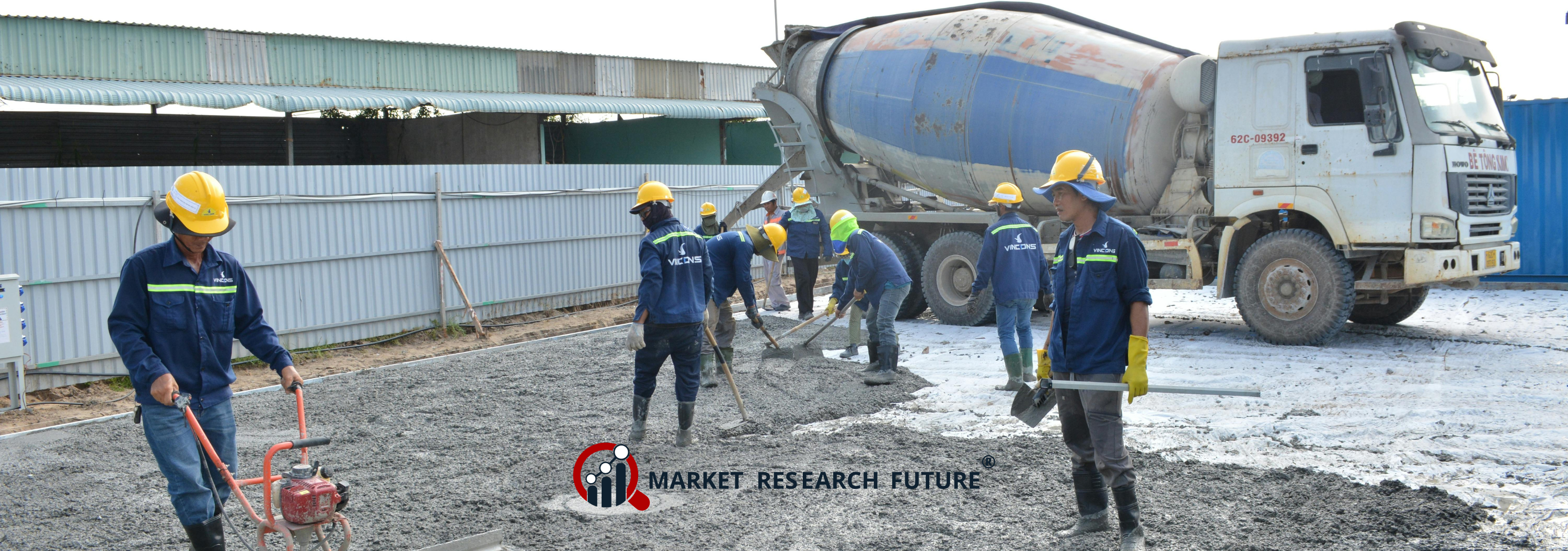
The Cement and Concrete Additive Market competitive landscape is shaped by numerous key players driving innovation and growth. As the market evolves, companies are re-evaluating their strategies to capture significant market share in a growing sector. The current market size stands at approximately USD 21.7 billion in 2024, with projections indicating a surge to USD 51.44 billion by 2035. This growth is fueled by an increasing emphasis on sustainable construction practices and an expanding range of products available in the marketplace.
Key industry participants such as LafargeHolcim (CH), Cemex (MX), HeidelbergCement (DE), CRH (IE), BASF (DE), Sika (CH), Saint-Gobain (FR), GCP Applied Technologies (US), and Fosroc (GB) are pivotal in shaping this competitive landscape. Their combined efforts in research and development have spurred advancements in additive technologies, particularly in the field of eco-friendly products. As these companies invest in cutting-edge technologies, they are better positioned to meet rising consumer demand for sustainability and performance. This competitive environment compels firms to innovate continuously to maintain relevance.
Market analysis reveals that the primary drivers influencing the competitive landscape include technological advancements, changing consumer preferences, and regulatory pressures. Companies are increasingly focusing on developing additive solutions that not only enhance performance but also comply with environmental regulations. For instance, firms are introducing high-performance, low-carbon additives that contribute to building sustainability. However, challenges persist, such as fluctuations in raw material costs and competition from low-cost alternatives. These factors compel market leaders to innovate and adopt strategic collaborations that can bolster their market position.
Regionally, North America maintains its dominance, driven by substantial investments in infrastructure development and robust construction activities. In contrast, the Asia-Pacific region demonstrates the highest growth potential, largely due to rapid urbanization and government-backed infrastructure projects. Countries like China and India are pivotal players in this growth trajectory, with massive construction initiatives requiring innovative cement and concrete additives. The competitive dynamics vary by region, as companies adapt their strategies to meet localized demands and regulatory environments.
Investment opportunities within the Cement and Concrete Additive Market are abundant, particularly in the development of new product lines that align with sustainability trends. Businesses that leverage technological advancements, such as AI and machine learning, in the formulation of additives can gain a competitive edge. Collaborations between companies for joint development projects are also becoming more common, allowing them to share knowledge and resources while maximizing output. These dynamics enhance market resilience and provide avenues for capturing incremental market share.
Recent statistics indicate that the global market for cement additives is projected to grow at a compound annual growth rate (CAGR) of approximately 9.5% from 2024 to 2035. This robust growth can be attributed to a growing global construction market, which was valued at around USD 10 trillion in 2022 and is expected to reach USD 14 trillion by 2030. The burgeoning demand for durable and sustainable infrastructure further accelerates the need for advanced cement and concrete additives, particularly in emerging economies. For instance, the Indian government’s push for the "Housing for All" initiative is expected to boost the demand for innovative construction materials, including high-performance additives, by nearly 25% over the next decade.
Additionally, regulatory measures aimed at reducing carbon footprints in construction practices are shaping product development strategies within the industry. In 2021, the European Union introduced stricter regulations on carbon emissions, which have prompted companies to invest in low-carbon technologies. For example, Sika AG has reported a 15% increase in demand for its eco-friendly product lines since adopting these sustainability measures. Such cause-and-effect dynamics not only showcase the market's response to environmental pressures but also highlight the potential for companies to drive innovation through compliance with regulations.
The future outlook for the Cement and Concrete Additive Market suggests a trend towards greater integration of innovative technologies. Companies that focus on research and development will likely lead the charge in creating products that meet the evolving needs of the construction industry. Experts predict that the market will continue to expand, supported by ongoing investments in sustainable practices and advanced manufacturing processes. Strategic partnerships and acquisitions may also shape the market landscape, influencing the competitive dynamics through 2035.
Browse for more Reports:

 English
 Arabic
 French
 Spanish
 Portuguese
 Deutsch
 Turkish
 Dutch
Dutch
 Italiano
 Russian
 Portuguese (Brazil)
 Tiếng Việt